MediaWorks has announced its 2017 programming line up, which is set to entertain audiences and deliver advertising opportunities with a feast of local and international reality TV and drama.
Could viral sensations and interviews with models in pools be heading to TV3’s 7pm timeslot? One of the biggest breakthroughs in MediaWorks’ string of announcements this week is The Project being added to its current affairs fold.
Buying content is easy. But getting viewers to tune in so you can make money from it is a whole other channel. We chat to TVNZ’s Jeff Latch and Andrew Shaw about how they’re planning to address the latter part of this equation.
We take a look at yesterday’s new season announcement to see how TVNZ is reacting to convergence and what it is going to fill the screens with, with a line up including Survivor New Zealand, Filthy Rich and new international hits.
MediaWorks and NBC International have appointed Maria Mahony as the general manager for Bravo New Zealand. She joins the joint venture from her recent role as the head of programming and local content for Lightbox, arriving with 17 years in local and international broadcasting experience at a range of companies, including MTV, Nickelodeon, Comedy Central, TVNZ (Lightbox is yet to announce a replacement for Mahony).
NZ On Air has made a move to grow New Zealand’s online talent in a partnership with YouTube at a time when its channels are followed like TV series. However, according to new research, the same cannot be said about the platforms branded channels.
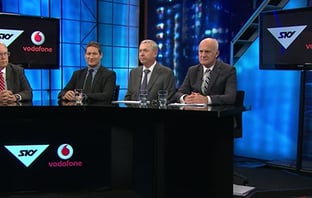
At the press conference, held on Thursday, Vodafone chief executive Russell Stanners sat alongside Sky chief executive John Fellet, Sky chief financial officer Jason Hollingworth and Sky chairman Peter Macourt, during a presentation that saw the executives outline their motivations and plans for forming the joint company. And, as is often the case with such events, the most interesting discussion happened when journalists started asking questions.
When news broke of Hilary Barry’s resignation on Friday night, many reports indicated that the media company’s chief executive Mark Weldon would have found it frustrating given that he was poised to make a major announcement on Tuesday. Well, Tuesday has arrived, and despite the chaos encircling MediaWorks, it has still delivered its “big” news. This morning, MediaWorks sent out a release to the media confirming that it had signed a joint venture with NBCUniversal International Networks, which will see channel Four transformed into Bravo by July 2016.
The odds were not in their favour when they took over as new face of current affairs on TV3 in June last year. But week in, week out Duncan Garner and Heather du Plessis-Allan have slogged it out in the competitive 7pm timeslot, and they’re closing in on the competition across at TVNZ.
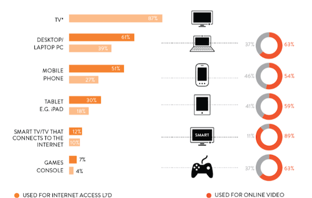
As the number of screens we own rises and content that was once limited to the TV spreads its way across new platforms, it appears ye olde faithful television is remaining resilient with Kiwis yet to avert their eyes entirely according to the latest New Zealand multi-screen report by Nielsen.
Prime TV has unveiled a new, colourful look to coincide with the new programming schedule for its 2016 season.
In 2014, Noel Leeming took a break from the regular retail approach of shouting about price and product to revamp its brand and launch a platform that focused on explaining what the items in store—and their underlying technology—enabled. This repositioning cost the company around $5 million, and it is now looking to build on this investment by rolling under a series of new spots that again focus on telling the stories of the products.
TVNZ is looking to offer advertisers a means by which to reach male audiences through a new free-to-air TV channel. We chat to the broadcaster’s chief executive Kevin Kenrick about why it’s made this move.
In 2015, the maturation of New Zealand’s SVOD market was tracked in the column inches of media journalists across the industry. And this trend has already continued this year with Netflix making headlines by extending its service to 130 countries across the world and then saying that it was looking into clamping down on VPN users to ensure they can’t log into global content. We chat to Lightbox chief executive Kym Niblock about what’s likely to happen in the SVOD market in 2016.
Over the last two years, TVNZ has invested significantly in large-scale campaigns to keep Shortland Street fans engaged with the show during the summer hiatus. And as was the case last year, the strategy has paid off with the latest campaign resulting in over 410,000 interactions. PLUS: Shortland Street fan dresses in black to mourn the passing of Dr Wendy Cooper.
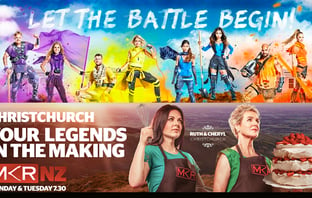
The ladles and the drills came to blows last year, as the local editions of My Kitchen Rules (MKR NZ) and The Block saw TVNZ and MediaWorks go head to head with their respective multi-night format shows. And the competitive banter between the networks is set to continue this year, with both shows returning to Kiwi screens. The first round of the bout went to MediaWorks, with the Block coming out on top in the 25-54 demographic as it attracted an audience of 158,800, narrowly ahead of the 157,100 people who tuned in to watch MKR.
The decision to place an aged loved one into assisted care is never easy. On the one side you have the pride of the the grandmother or grandfather, who has been independent for longer than their children have been alive. And then on the other side, you have the children who don’t want their parents to feel as though they’re being imprisoned in a home. And in its new TV ad by Rainger & Rolfe and Film Construction, Oceania Healthcare addresses this awkward situation by showing that sometimes both the parents and their children are on the same page without realising it.
In an ongoing series, StopPress talks to a range of newsmakers to find out how those trying to shine lights into dark places are keeping their own lights on and whether commercial realities are leading to editorial compromise. Next up, Ben Fahy talks with TVNZ’s chief executive Kevin Kenrick.
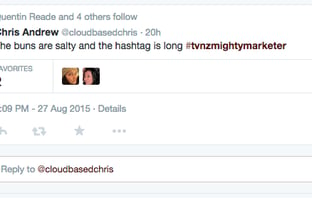
It has become commonplace for the organisers of corporate events to encourage those in attendance to Tweet about the experience. And last night’s TVNZ NZ Marketing Awards was no different. Throughout proceedings, references were made to #TVNZmightymarketer and some of the well-dressed folk responded had a bit of fun on the platform. Here’s a rundown of the action as told through Tweets.
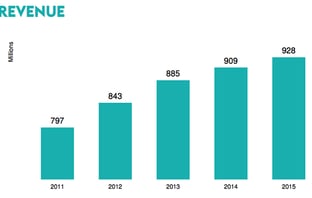
It isn’t difficult to find someone making a negative comment about Sky TV’s service on social media. The broadcaster is a proverbial punching bag, with shots regularly flying in from Kiwis across all the available channels. And yet, despite the continuous stream of negativity, Sky’s revenue and profits continue to rise at a time when digital disruption is cutting a huge chunk out of the profitability of the other broadcasters.
Our weekly wrap of good things, strange things, funny things and other things from inside the intertubes.
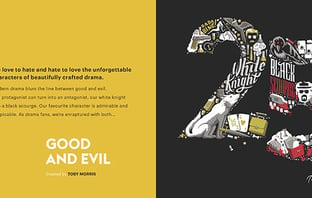
While Sky was officially founded 28 years ago in 1987, it was first beamed into New Zealand households 25 years ago. And to celebrate the silver anniversary it’s got a bunch of artists to capture the essence of why we watch TV. And it’s also repaying the loyalty of subscribers by offering them an opportunity to win one of 25 fan experiences in New Zealand and around the world.
Accenture recently showed that 87 percent of individuals watch TV with their devices within arm’s reach, meaning that a smartphone can quickly become a medium by which to escape the advertising that punctuates a television show. Add to this the fact that Google’s recent Consumer Barometer report showed that 72 percent of Kiwis own a smartphone and that almost a quarter of the population now access the internet more often via a smartphone than any other device and it becomes clear that smartphones are a place where brands should be. This is not to say that television, which continues to reach 92 percent of the population, should be abandoned as an advertising channel, but that it should rather be used in conjunction with other available channels. Snakk Media has just launched a way for Kiwi advertisers to do this.
Today, MediaWorks announced via a story published on 3News that John Campbell would be leaving Campbell Live and that the show would be replaced by an alternative current affairs programme in the 7pm slot. The new show is expected to start within the next six to eight weeks and will run Monday to Thursday, with a yet-to-be-announced entertainment show running on Friday evenings.
Last night, an average of 333,000 Kiwis tuned in to watch Beau Monga crowned as the winner of the second season of The X Factor NZ. And although this was well below the 446,000 viewers that tuned in for the last finale in 2013, MediaWorks spokesperson Rachel Lorimer saw some positives in the numbers.
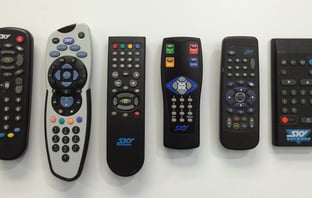
While Sky was incorporated in 1987, its social channels were drawing attention to its 25th birthday yesterday. The remotes have changed a lot in that time, as has the broader media market, and while it still counts over half of the country’s 1.6 million households as subscribers and raked in record profits last year, there’s no doubt the competition has ramped up significantly in recent years. So, in honour of this milestone, here’s a story we wrote last year about Sky’s fruitful relationship with its long-serving agency DDB.
We keep hearing it: TV is dead and digital is the dream; your ticket to ever-lasting marketing glory. But BrandWorld’s Mike O’Sullivan says TV is still alive and well and consumers’ passion for video shows no sign of letting up.
After farts, contestant scandals and fiery familial encounters, The Bachelor NZ concluded on Wednesday and, according to data from Nielsen, the finale attracted 900,500 viewers. This number averaged out at 461,1000 over the course of the show, and the ratings show that 227,100 viewers in the 25-54 demographic tuned in to watch Art Green choose Matilda Rice over Dani Robinson.
“When the copyright owners are posting videos of Taylor Swift [to YouTube] before giving them to us to play it leads us to question why we exist,” says Flame Tree Media founder and director Dan Wrightson. And for this reason he’s decided to change direction of the channel after 21 years.
Fly Buys has released a new campaign via Clemenger BBDO that emphasises the variety of rewards members can get with Fly Buys and how easy it is to receive them by simply “getting stuff free by doing the stuff you do every day”.