
News


Goodnight Kiwi FM
After around ten years of broadcasting, originally as a Kiwi-only music station and more recently with some international artists thrown in the mix, MediaWorks has announced that Kiwi FM will close on March 31.

After around ten years of broadcasting, originally as a Kiwi-only music station and more recently with some international artists thrown in the mix, MediaWorks has announced that Kiwi FM will close on March 31.
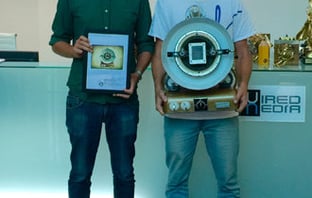
In the latest edition of the Orca awards, FCB’s Matt Williams and Freddie Coltart picked up the award award for their outrageous 45-second sale radio campaign for AS Colour.

In response to ongoing speculation about the future of The Radio Bureau, NZME and MediaWorks have released a joint statement saying that the future of the industry body “remains solid and secure”. Several sources in the industry have confirmed to StopPress that TRB will not be dissolved and that MediaWorks and NZME are working closely with the independent radio stations to re-shape the organisation to make to ensure it remains relevant in the media landscape. And this restructure has led to some additional staff changes. Update: TRB confirms three new appointments.
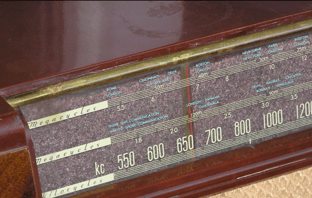
The radio industry has been fizzing in recent months. MediaWorks claimed that it was leading the charge on a new research methodology, NZME then decided to independently finance an industry-wide T1 survey after it was scrapped earlier this year, and then Gill Stewart stepped down from her position as the general manager of The Radio Bureau (TRB). So is there still a place for TRB?
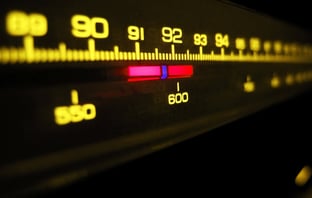
In December, the radio industry came to an accord that the radio survey scheduled for the first half of the year would not occur. However, it now seems that after several weeks of contemplation, NZME has taken matters into its own hands and earlier today announced it will fully fund an independent survey of radio audiences in Auckland, Wellington and Christchurch. And this move has caught MediaWorks off-guard.

The Radio Bureau has announced the first Orca winner of 2015, and the gong has gone to JWT’s Mike Ramsay and Mariona Wesselo-Comas for their work on the ‘Drunky Pants’ spot that was created for Auckland Transport as part of the Drunksense campaign, which has been developed to relay the message that stupid things—such as driving home—tend to make sense to drunk people.

Charity organisation Shine is raising awareness of domestic abuse after sporting matches with the launch ‘No Excuses,’ a hard-hitting radio campaign by creative agency Whybin/TBWA that features high profile rugby commentators Tony ‘TJ’ Johnson and Scott ‘Sumo’ Stevenson in three different radio clips.
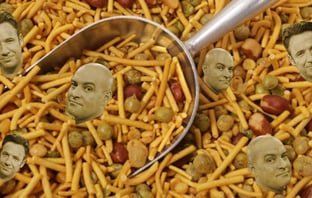
The Alternative Commentary Collective (ACC) has since its inception in 2012 become a standard part of the Kiwi cricket experience for many fans, who tune in to enjoy a comedic twist on the usual ball-by-ball rundown of the games. Following on from the success of the iHeartRadio-hosted show, frequent contributors Leigh Hart and Jason Hoyte in March 2014 launched Sports Bhuja, a sports-related chat, comedy and music show, which initially aired on radio Hauraki on Saturday mornings—and the segment has proven so popular, that the pair have now been given a slot on Radio Hauraki’s drive time show.

Last week, a listener’s decision to thumb up Steely Dan’s Josie while logged into Pandora took the platform to the milestone of 50 billion thumbs up across the United States, Australia and New Zealand. PLUS: Pandora reveals most-liked songs in New Zealand.
MediaWorks Radio and Radio Tarana (which has been broadcasting in New Zealand since 1996) have formed a new partnership in an effort to create fresh commercial opportunities for their respective clients. And the move makes sense for both the network and radio station, given the demographic changes in New Zealand over the last two decades.

Changes at NZME, Bauer, TVNZ, Omnicom Media Group, bFM and The Breeze.

In a market cluttered market with various sports drink options, Mizone has launched a new campaign via Colenso BBDO that positions the brand as the ‘modern man’s hydration’ solution.
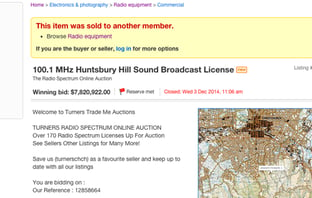
In the digital age, the buying of radio frequencies seems almost archaic. The internet means that any major radio brand can now be accessed across the nation. And yet, in the recent Radio Spectrum auction, NZME broke a record by paying $7.4 million to retain the frequency it currently uses for Newstalk ZB in Christchurch. And while slightly more frugal than its competitor, MediaWorks Radio also pulled out the chequebook to pay $2.5 million for a frequency used for Mai FM in Waikato and $2 million for a frequency that will host George FM in Wellington. StopPress chats to MediaWorks group content director Leon Wratt and NZME Radio managing director Dean Buchanan to find out if it’s still worth paying that much for radio frequencies.

“I’m Guyon Espiner”.
“I’m Susie Ferguson”.
“And this is Morning Report – brought to you by Spicy Bob’s cheesy chicken tenders!”
Fear not. This is not something we’re likely to hear over the airwaves anytime soon.
Radio New Zealand will not sacrifice its brand by putting ads on the air, chief executive Paul Thompson tells StopPress.
Given the insight that Kiwi worker down their tools at 3.29 every Friday, at this time on 12 September FCB created a radio roadblock by playing Mitre 10’s ‘Bring on the Weekend’ song across six stations. And this creative—if somewhat unconventional approach—has now resulted in the agency winning an Orca award for the month of September.
The competition for Kiwi listeners, artists and advertisers is on, with music streaming companies like Spotify, Pandora, and iHeartRadio innovating rapidly to out-do each other down under, with analytics offers, better content and new ad units. StopPress looks at what tunes the providers are playing to try and increase their numbers. PLUS: Lorde-related stats!
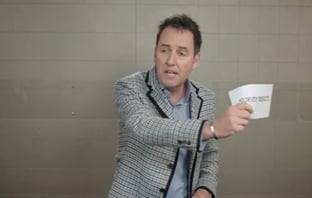
The radio survey is generally a competitive affair, which pits the two commercial radio networks against each other and invariably results in the liberal use of superlatives. The latest edition was no different. The releases from the respective networks read like pages torn out of a motivational speaker’s speech, drawing attention to all the positives that the result served up. MediaWorks used its release to draw attention to the fact that it overtook NZME in terms of overall station share in Auckland for the first time. And on the other side of the divide, NZME highlighted the continued dominance of Newstalk ZB, and singled out Mike Hosking for again having the number one breakfast show in New Zealand. PLUS: Matt Heath and Jeremy Wells celebrate Hauraki moving from 13th to 12th.
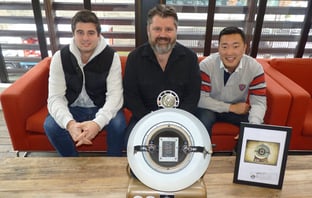
Ogilvy & Mather has claimed July’s Orca Award for placing an advertising message inside a music track. At 55 seconds into ‘I See Red’, Tim Finn interrupts the song urging people to go online and sign ‘The Last 55 petition’ to help save the Maui’s Dolphins. Joe Holden from BIG scored a merit award with the stories of Landrover’s origins told in a “true oldschool storyteller’s” voice.
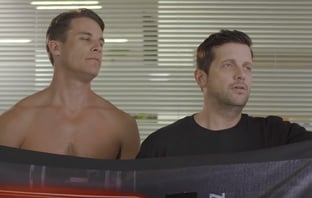
Radio Hauraki has fully embraced its 13th most-listened to breakfast show tag in recent months, with Jeremy Wells’ brilliant ‘Like Mike’ section being born out of a desire to replicate Mike Hosking’s morning success and a new online video series showing the team heeding memos from on high and doing a few things guaranteed to move them up the rankings, such as using t-shirt cannons and adding some sexual tension to the mix. And, as per usual, they’ve done it in slightly unusual, self-deprecating and moderately NSFW fashion.

Earlier this week The Edge was revealed as the brand behind Love You Man, a campaign that will undoubtedly ruffle the feathers of those with slightly more conservative views on the act of marriage. With the confirmation of Jay-Jay, Mike and Dom’s involvement came the announcement that the campaign forms part of a competition that will award a trip to next year’s Rugby World Cup to a pair of best mates who take their friendship to the next level by exchanging vows.
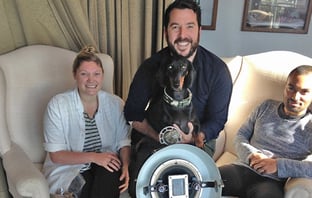
Colenso BBDO has won the June/July Orca award from the Radio Bureau with its doggie radio station K9FM, which already picked up a silver at the recent Cannes Lions. K9FM is a campaign for Colenso’s client Pedigree that dogs can listen to at home while their owners are out working. It stems from research that found that classical music calms dogs down, ambient sounds keep them stimulated and a relaxed voice eases their separation anxiety.
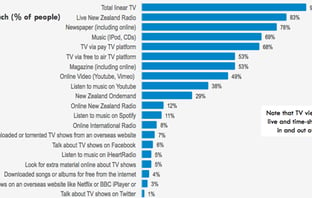
When it comes to reaching New Zealanders, ye olde traditional broadcast media is still on top, with the results of NZ On Air’s independent media consumption study showing the majority of Kiwis are still consuming lots of linear television and live radio every day. But music audiences, the young and the Asian community are leading the charge to digital platforms.

Sussan Turner has brought her 30-year career at MediaWorks to a close by announcing her resignation from the group chief executive role.
TRN has announced the launch of a new Auckland-based radio station and the extension of the ZM radio brand onto TV in the same week that MediaWorks is set to unveil the Edge TV. We chatted to chief content officer Dean Buchanan about these moves. PLUS: Radio Sport relegated to AM and TRN crashes The Edge TV launch party.

Colenso BBDO’s K9FM and Talkies spots for Mars Pedigree have taken silvers overnight in the radio category.

Colenso BBDO is the only Kiwi agency still standing in the Radio category after the shortlist was announced overnight. The Auckland-based agency’s campaign for Memphis Meltdown has been shortlisted twice for the ‘Voice Transplant’ and ‘Listen to your Stomach’ spots and the agency also got received nominations for the ‘Talkies’, ‘Meditation’ and ‘K9FM’ spots created for Pedigree.

On 12 May, Radio New Zealand’s chief executive Paul Thompson delivered a speech at the Commonwealth Broadcasting Association Conference held in Glasgow—and his thoughts on the industry stood in stark contrast to the optimism that has been voiced by the respective PR teams of the commercial stations. From the first line of the speech, which is currently available on the Radio New Zealand website, it’s clear that Thompson is bracing himself for a significant challenge in the role that he only stepped into nine months ago.
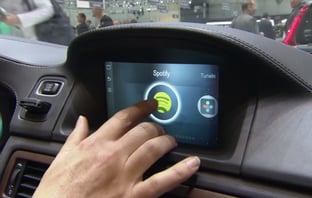
When in-car tape and CD players were first released, various analysts predicted the possible demise of the radio industry on account of the fact that people could customise their own playlists to personalise the listening experience. And while the industry managed to survive the tape deck and CD shuttle, the digital age is posing a new threat to radio’s continued dominance of in-car listening.
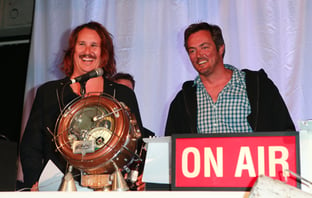
In contrast to the major advertising awards shows that are typified by large round tables, three-course meals and formal attire, the ORCA Awards, held last night at the Nathan Club in Auckland, was a stripped down affair that took a tongue-in-cheek look at the ads created by the six finalists. Over the course of the event, the organisers released a series of videos of radio personalities Bryce Casey, Guy Williams and Dave Fane sharing their often hilarious thoughts on the shortlisted ads.
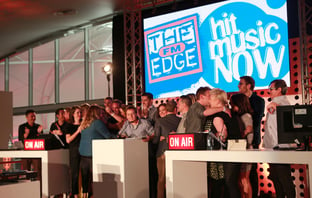
Although radio usually sits in the background while the in vogue content delivery mediums soak up the limelight, the last few weeks have bucked that trend and brought radio to the centre of a varied range of media discussions. And given that radio is currently attracting so much attention, it’s only fitting that the New Zealand Radio Awards last night celebrated the best talent among those who are often heard and rarely seen (although, this is changing). As was the case last year, MediaWorks again led the charge in terms of numbers by picking up a total of 29 gongs throughout the course of the night, followed by TRN with 15 and Radio New Zealand with nine.