Get the latest direct to your inbox twice a week. Sign up today. 
The day of the RFIDs

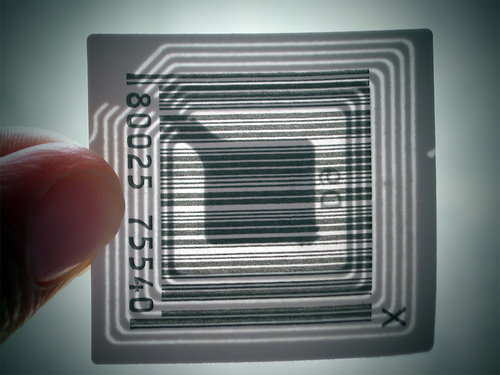
 What is Radio Frequency IDentification (RFID)? Why should retailers care? What do New Zealand consumers think about it? And is RFID technology ready to change the way some Kiwi businesses operate?
RFID simply refers to technologies that use radio waves to identify objects. Retailers use such technology to identify inventory and enhance their consumer services. In terms of the clothing retail industry, retailers would attach an RFID tag, which is comprised of a minute, inexpensive computer chip with a miniature antenna, to a garment in order to reap such benefits (more in-depth explanations about RFID technology and how it can benefit retailers can be found here and here).
What NZ consumers thought of RFID was the primary focus of my recent study at Victoria University of Wellington. In collaboration with my supervisors, Jayne Krisjanous and Professor Peter Thirkell, we researched New Zealand consumer’s awareness and knowledge of RFID technology, how they heard about the technology, their attitude towards it and, most importantly, intention to purchase products that have an RFID tag attached to it. The product researched in this study was clothing, as the clothing retail sector is predicted to be the largest growth area of RFID adoption.
It’s estimated the global clothing industry spent $44.8m on RFID solutions in 2009 and this is slated to triple to $125m in 2014. Clothing retailers such as Marks & Spencer, Prada and American Apparel have already successfully implemented RFID systems.
NZ consumers awareness of RFID
 Awareness was measured by asking if respondents had heard of RFID. 33 percent of consumers had heard of RFID technology. The majority of consumers who were aware of RFID only have some to very little knowledge about the technology.
Where did they hear about RFID?
The majority of consumers had heard about the technology through print media, such a newspapers and magazines.
Information about RFID given to consumers
The study provided information, which had been heavily cited in RFID literature, including a comprehensive description of RFID technology itself and applications/issues that arise from its use in the clothing retail setting. This was in order to provide a well-balanced representation of applications/issues that consumers would likely be confronted with in a clothing retail store that has implemented an RFID system.
The applications of RFID in the clothing retail setting outlined were:
- The RFID tag enabling consumers to access real-time and accurate information about what colours, styles and sizes are available in the store at a given time.
- The RFID tag acting as a warranty or proof of purchase (as the relevant information can be gathered from the stores RFID system reading the tag), which reduces the need for receipts.
- Privacy concerns, surrounding the use of RFID in the clothing retail setting, were also conveyed. This addressed issues such as consumers being tracked and traced if the RFID tag is not deactivated on leaving a store.
Consumer Attitudes
Having read about the technology, Kiwi consumer attitudes appeared relaxed towards the use of products (clothing) enabled with an RFID tag. Attitudes largely varied between ambivalence and a modest positive attitude.
Intention to Buy
 But the intention to buy clothing with an RFID tag attached to it is not quite as relaxed as their attitude. The analysis showed the majority of New Zealander’s (52 percent) would ‘probably’ or ‘definitely’ buy clothing that has an RFID tag attached to it. Only four percent would ‘definitely not’ purchase.
Clearly, there are benefits to be gained by using RFID technology in retail, both for the retailer and the consumers. So what’s preventing adoption?
For more information about RFID and this study’s findings please email [email protected].